Showing posts with label harper lee. Show all posts

Tuesday, July 14, 2015

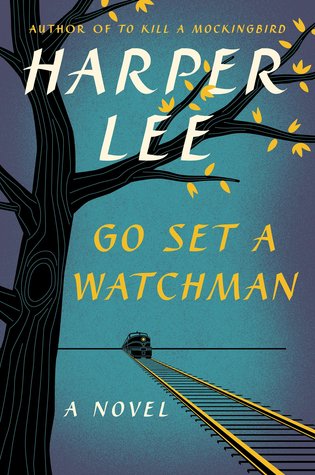
Go Set a Watchman by Harper Lee


24817626After capturing the hearts of readers with her landmark debut 1960-masterpiece, To Kill a Mockingbird, Pulitzer Prize-winning author Harper Lee returns with her second and highly controversial book after a gap of fifty-five years much to the delight of Mockingbird fans, and the consternation and skepticism of some. If To Kill a Mockingbird was a book about a racially-inflamed rape trial in Alabama narrated by a young girl named Jean Louise Finch, nicknamed Scout, then Harper Lee’s much-anticipated second book is much more than that – an agonizingly painful yet tender story of growth and maturing, for good or for bad.

Go Set a Watchman by Harper Lee is set twenty years after To Kill a Mockingbird and follows a grown-up twenty-six years old Scout as she returns from New York City to her childhood home in Alabama to visit her ailing father, Atticus Finch, who is now seventy-two and suffering from arthritis. Scout, who now prefers her legal name Jean Louise, is deeply pained and hurt by her father Atticus who now holds views diametrically opposite to what he once proudly embraced. She found among his reading materials a racist tract called “The Black Plague.” She is forced to confront him though it did little to change him. Ultimately, the novel is about the later lives of the Finch family, including lawyer Atticus, Scout, and Scout’s older brother Jem who has died of a congenitally disordered heart.

What I really adored about the book is the way in which Harper Lee balances the sense of wistfulness, melancholy and longing that is running throughout the book with the cynical views of Atticus, who as a good-hearted widowed single father was a much-loved figure in To Kill a Mockingbird. The transformation of Atticus is revolting but he has his own reasons. Intermittently, there are flashbacks and references to the past. The most telling effect of the transformation and growth into adulthood of Scout is her preference of her legal name Jean Louise over Scout, the nickname with which she was addressed during her adolescent years. The on and off romance between Scout and a newly introduced character, Henry Clinton, gives the story a fillip and much-needed flavour.

Though some readers may find fault with the third-person narrative which is in stark contrast to the first-person account of Scout in To Kill a Mockingbird, I feel it syncs well with the tone and tenor of the story. Honestly, I never expected, or for that matter, wanted Go Set a Watchman to be a better book than To Kill a Mockingbird. All I wanted for this book was to showcase the adult life of Scout and Jem, and their father, Atticus. Harper Lee has not only succeeded in that aspect, but delivered an explosive plot twist that no one ever expected. Go Set a Watchman is about a young woman’s disillusionment at the racism that invades her hometown and her family. It is a story about the loss of innocence and the heartbreak at the loss of a brother as much as it is a coming-of-age story. Whatever critics may say and whatever its shortcomings may be, Go Set a Watchman is a worthy follow-up and companion to To Kill a Mockingbird.

Monday, February 09, 2015

Go Set a Watchman by Harper Lee


Another book from Harper Lee? Is it the biggest literary coup the world has ever witnessed?

No one can tell for sure. No one is certain what it means. What, however, is undeniable is the fact that fifty-five years ago in 1960 Harper Lee became a worldwide phenomenon with the publication of her novel, "To Kill a Mockingbird."

That's it! As the world went wild, she became a recluse of sort and no other book ever followed. Period. The world goes crazy with the announcement that another book from Harper Lee is set to come out this July, titled Go Set a Watchman. The striking similarity between the two titles can't be missed!

Nothing much is known about her new book except the blurbs available on retail sites. For the benefit of Huithiang readers, here's a brief biography of Harper Lee:

The woman who wrote To Kill a Mockingbird is 88 years old and uses a wheelchair, after a stroke. She is profoundly deaf, almost blind, and lives in a care home on the outskirts of the small town in Alabama where she was born. She has become the recluse people always thought she was, when actually she was just avoiding the extreme fame that goes with writing one of the best-loved novels of all time.

American writer, famous for her race relations novel To Kill a Mockingbird, which was awarded the Pulitzer Prize in 1961. The book became an international bestseller and was adapted into screen in 1962. Lee was 34 when the work was published, and it has remained her only novel.


"Mockingbirds don't do one thing but make music for us to enjoy. They don't eat up people's gardens, don't nest in corncribs, they don't do one thing but sing their hearts out for us. That's why it's a sin to kill a mockingbird."
     
Descendent from Robert E. Lee, the Southern Civil War general, Harper Lee was born in Monroeville, Alabama. Her father was a former newspaper editor and proprietor, who had served as a state senator and practiced as a lawyer in Monroeville. Lee studied law at the University of Alabama from 1945 to 1949, and spent a year as an exchange student in Oxford University, Wellington Square. Six months before finishing her studies, she went to New York to pursue a literary career. She worked as an Airline reservation clerk with Eastern Air Lines and British Overseas Airways during the 1950s. In 1959 Lee accompanied Truman Capote to Holcombe, Kansas, as a research assistant for Capote's classic 'non-fiction' novel In Cold Blood (1966).
     
To Kill a Mockingbird was Lee's first novel. The book is set in Maycomb, Alabama, in the 1930s. Atticus Finch, a lawyer and a father, defends a black man, Tom Robinson, who is accused of raping a poor white girl, Mayella Ewell. The setting and several of the characters are drawn from life - Finch was the maiden name of Lee's mother and the character of Dill was drawn from Capote, Lee's childhood friend.

"But there is one way in this country in which all men are created equal - there is one human institution that makes a pauper the equal of a Rockefeller, the stupid man the equal of an Einstein, and the ignorant man the equal of any college president. That institution, gentlemen, is a court. It can be the Supreme Court of the United States of the humblest J.P. court in the land, or this honorable court which you serve. Our courts have their faults, as does any human institution, but in this country our courts are the great levelers, and in our courts all men are created equal." (Finch defending Tom Robinson)
     
The narrator is Finch's daughter, nicknamed Scout, an immensely intelligent and observant child. She starts the story when she is six and relates many of her experiences, usual interests of a child and collisions with the reality which intrudes into the sheltered world of childhood. Her mother is dead and she tries to keep pace with her older brother Jem. He breaks his arm so badly that it heals shorter than the other. During the humorous and sad events Scout and Jem learn a lesson in good and evil and justice. As Scout's narrative goes on, the reader realize that one watches a personality in the making. Scout tells her story in her own language which is obviously that of a child, but she also analyzes the events from the viewpoint of an already grown-up, mature person. We know that she will not grow to become a stiff society lady and she will never kill a mockingbird or wrong a weak person.
     
The first plot tells the story of Boo Radley, who is generally considered deranged, and the second concerns Tom Robinson. A jury of twelve white men refuse to look past the color of man's skin and convict Robinson of a crime he did not commit. Atticus, assigned to defend Tom, loses is court. Bob Ewell, Mayella's father, is obviously guilty of beating her for making sexual advances toward Tom. Bob attacks Jem and Scout because Atticus has exposed his daughter and him as liars. The children are saved by Boo Radley. Atticus and Calpurnia, the black cook, slowly became the moral centre of the book. They are portrayed as pillars of society who do not share society's prejudices. The story emphasizes that the children are born with an instinct for justice and absorb prejudices in the socialization process. Tom becomes a scapegoat of society's prejudice and violence. - "Mr. Finch, there's just some kind of men you have to shoot before you can say hidy to 'em. Even then, they ain't worth the bullet it takes to shoot 'em. Ewell 'as one of 'em."
     
Although her first novel gained a huge success, Lee did not continue her career as a writer. She returned from New York to Monroeville, where she has lived avoiding interviews. To Kill a Mockingbird has been translated into several languages. An illustrated English edition appeared in Moscow in 1977 for propaganda reasons. In the foreword Nadiya Matuzova, Dr.Philol., wrongly stated that "Harper Lee did not live to see her fiftieth birthday," and added perhaps rightly: "But her only, remarkable novel which continued the best traditions of the American authors who wrote about America's South - Mark Twain, William Faulkner, Erskine Caldwell and many others - will forever belong in the treasure of progressive American literature."

COURTESY: Harper Lee's Website